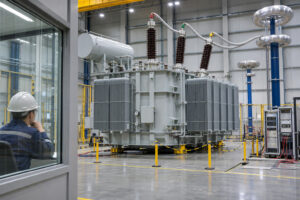
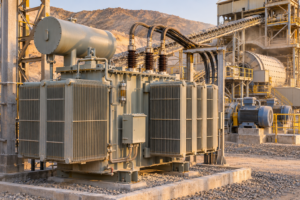
A transformer and its switchgear cannot be specified independently. Transformer impedance influences available fault current, voltage drop and motor-starting performance, while switchgear interrupting ratings and protective-device settings determine how faults are cleared.
When equipment is ordered before the system study is mature, teams may discover that fault duty exceeds a breaker rating, protection cannot coordinate or the selected impedance creates an unacceptable voltage dip. Early data exchange prevents expensive redesign.
Build a Reliable Short-Circuit Model
The study should use the utility source contribution, generator and motor contribution, cable impedances, transformer positive- and zero-sequence data, grounding arrangement and credible operating configurations. Maximum and minimum fault levels are both important.
Maximum current checks equipment duty. Minimum current determines whether protective devices will detect and clear faults within the required time, especially at the end of long feeders or under alternate source conditions.
Data to Exchange Before Purchase
Transformer rated power, voltage ratio, impedance tolerance, vector group and neutral grounding.
Switchgear voltage class, continuous current, short-time withstand and interrupting ratings.
CT ratios and accuracy, relay functions, breaker operating time and fuse characteristics.
Motor sizes, starting methods, generator contribution and inverter fault-current assumptions.
Normal, maintenance, tie-breaker and emergency operating configurations.
Required selectivity, arc-flash reduction features and utility interconnection constraints.
Carry the Study into Commissioning
Approved relay settings and trip logic should match the final as-built equipment data. Changes in transformer impedance, cable length, CT ratio or breaker type must be fed back into the model before energization.
Commissioning tests should verify CT polarity, trip circuits, interlocks, breaker timing and communication-assisted protection where used. The final study, setting files and test results then become the baseline for future system changes.
Next Step
SOVIN can coordinate transformer and switchgear interfaces for integrated power-distribution projects. Review the prefabricated compact box substation and provide the current single-line diagram and available fault data.
Technical reference: IEC 60909 for short-circuit current calculations and the applicable IEC or IEEE switchgear standards.
Nhu cầu điện toàn cầu đang tăng nhanh trong giai đoạn 2026–2027. Hãy tìm hiểu lý do tại sao hiệu suất máy biến áp, công suất lưới điện, việc xác định thông số kỹ thuật sớm và quy hoạch phối hợp hệ thống thiết bị đóng cắt lại quan trọng đối với các dự án điện mới.
Transformer testing gives the buyer evidence that the manufactured unit matches the approved design and applicable standard. A list of pass results is not enough: the records must be traceable to the specific serial number, calibrated instruments ...
Grid connection queues are becoming a central issue for power-system developers. The International Energy Agency’s Electricity 2026 report says more than 2,500 GW of renewable generation, storage and large-load projects are waiting in connection q...
Crushers, mills, conveyors, pumps and fans make mining and cement plants demanding electrical environments. Large motors create starting and cyclic loads, while dust, high ambient temperature and limited shutdown windows challenge transformer cool...
 Các danh mục nổi bật












Gửi yêu cầu tư vấn về sản phẩm
Chúng tôi sẽ liên hệ với quý khách trong vòng 24 giờ